BlogWP Documentation

Introduction

BlogWP is a beautiful, responsive and multi-purpose blogging theme for WordPress. It has user-friendly theme options to configure the theme quickly and features a top navigation menu, featured content area, post styles (grid and full), full-width layout for posts/pages, sticky menu and sticky sidebar, right sidebar, 3 footer columns, social icons, scroll-to-top button and more. BlogWP theme also has a translation-ready codebase. The theme is very starter-friendly and easy to set up.

Quick Start Guide

  1. Install & activate the theme via Appearance → Themes → Add New.
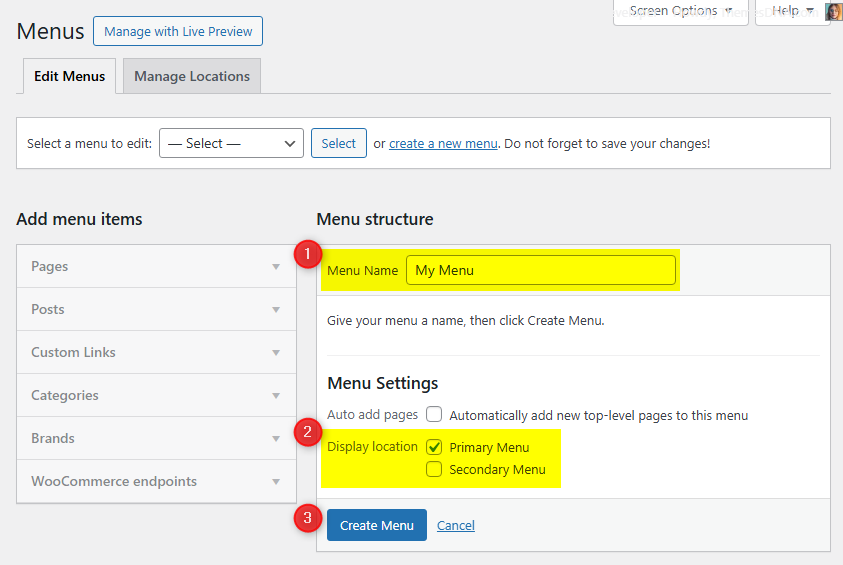
  2. Set up your menus by going to Appearance → Menus. Create a menu and assign it to the available menu location.
  3. Configure widgets by going to Appearance → Widgets. Add widgets to the available widget areas.
  4. Customize by going to Appearance → Customize → Theme Options. Set up your featured content, social links, header options, and more.

Theme Features

  • Responsive Design
  • Featured Content Area
  • Grid and Full Post Styles
  • 1 Navigation Menu (Primary)
  • Sticky Menu and Sticky Sidebar
  • 1 Right Sidebar and 3 Footer Widget Columns
  • Multiple Full-Width Widget Areas
  • 30+ Social Profile Links
  • Custom Logo Support
  • Custom Header Image
  • Custom Background
  • Author Bio Box
  • Translation Ready
  • Back to Top Button
  • FitVids.JS for Responsive Videos
  • Header Banner Widget Area for Ads

Theme Installation

Method 1: Install via WordPress Dashboard (Recommended)

  1. Log in to your WordPress Dashboard.
  2. Navigate to Appearance → Themes → Add New.
  3. Search for BlogWP in the search box.
  4. Click Install on the BlogWP theme, then click Activate.

Method 2: Upload via WordPress Dashboard

  1. Download the blogwp.zip theme file from WordPress.org.
  2. Log in to your WordPress Dashboard.
  3. Navigate to Appearance → Themes → Add New → Upload Theme.
  4. Click Choose File, select the blogwp.zip file, and click Install Now.
  5. After installation, click Activate.

Method 3: Upload via FTP/File Manager

  1. Download the blogwp.zip theme file and extract it.
  2. Connect to your server via FTP (FileZilla) or use your hosting File Manager.
  3. Upload the extracted blogwp folder to /wp-content/themes/.
  4. Go to your WordPress Dashboard → Appearance → Themes and activate BlogWP.

Troubleshooting Installation Issues

  • "The uploaded file exceeds the upload_max_filesize directive" – Your hosting limits file uploads. Increase the limit via php.ini, .htaccess, or contact your host. Alternatively, use FTP.
  • "The package could not be installed. The theme is missing the style.css stylesheet" – You may be uploading the wrong file. Make sure you upload only the blogwp.zip file.

Import Demo Content

You can import the demo content, widgets, and Customizer settings shown in the BlogWP theme demo.

Manual Demo Import

Step 1: Import Main Site Content

This includes: Posts, pages, menus, media, categories, tags, comments, and custom fields.

  1. Download: XML File
  2. Go to Tools → Import.
  3. Under "WordPress", click Install Now if not installed.
  4. Click Run Importer.
  5. Select the XML file and click Upload file and import.
  6. Check "Download and import file attachments", click Submit.

Step 2: Import Widgets

  1. Install the Widget Importer & Exporter plugin.
  2. Go to Tools → Widget Importer & Exporter.
  3. Copy content from: Widgets .wie File and paste into the box.
  4. Click Import Widgets.

Step 3: Import Customizer Settings

  1. Download: Customizer File
  2. Install the Customizer Export/Import plugin.
  3. Go to Appearance → Customize → Export/Import.
  4. Select the .dat file, check "Download and import image files?", click Import.

Regenerate Thumbnails

If your website already has existing posts with featured images, it's highly recommended to regenerate thumbnails after activating the BlogWP theme. This ensures that all images match the new theme's layout and display sizes.

Regenerating thumbnails is optional if your site is completely new and doesn't have any uploaded images yet.

However, if you imported the demo content, regenerating thumbnails is essential to display images correctly across the site.

  1. Install and activate the Regenerate Thumbnails plugin.
  2. Go to Tools → Regenerate Thumbnails.
  3. Click the "Regenerate Thumbnails for All x Attachments" button to start the process.
  4. Wait until all images are regenerated. This may take a few minutes depending on your media library size.
  5. If you want, you can deactivate and delete the plugin once the process is complete.

This step ensures clean image alignment and sharp visuals throughout your website using the BlogWP theme.

Header Image

Use the WordPress Customizer to add or manage the header image that appears at the top of your site.

How to add a header image

  1. Go to Appearance → Customize → Header Image.
  2. Click Add new image and choose/upload your image (recommended width: 1050px or larger).
  3. Crop if prompted, then click Publish.

Useful options

  • Hide Header Content – hide the header content area (logo, title, description) via Appearance → Customize → Theme Options → Header Options.

The suggested header image width is 1050 pixels. The header supports flexible height, so you can use images of any height.

Widget Areas

There are 11 widget areas in the BlogWP theme. The free version does not bundle custom widgets; use WordPress core widgets or plugins of your choice inside these areas.


  1. Header Banner

    Located on the header of the web page. Useful for banner ads.

  2. Sidebar 1

    Left-hand sidebar for your pages/posts.

  3. Top Full Width Widgets (Home Page Only)

    Full-width area at the top of the homepage only.

  4. Top Full Width Widgets (Every Page)

    Full-width area at the top of every page.

  5. Top Widgets (Home Page Only)

    Above main content, shown on the homepage only.

  6. Top Widgets (Every Page)

    Above main content, shown on every page.

  7. Bottom Widgets (Home Page Only)

    Below main content, shown on the homepage only.

  8. Bottom Widgets (Every Page)

    Below main content, shown on every page.

  9. Footer 1 Widgets

    Footer column 1.

  10. Footer 2 Widgets

    Footer column 2.

  11. Footer 3 Widgets

    Footer column 3.

Page Templates

BlogWP includes two custom page templates you can use for full-width layouts without sidebars.

  • Full Width, no sidebar (Page) — Template for pages (template-full-width-page.php)
  • Full Width, no sidebar (Post) — Template for posts (template-full-width-post.php)

How to apply a template

  1. Edit a page or post in the WordPress editor.
  2. In the Page Attributes (or Post Attributes) panel, open the Template dropdown.
  3. Select Full Width, no sidebar and update/publish.

Use featured images with sufficient width (e.g., 1018px+) for best presentation in full-width layouts.

Customizer Theme Options

To see available WordPress Customizer theme options:

  1. Go to your WordPress Dashboard.
  2. Navigate to Appearance → Customize.
  3. Click on Theme Options.

Site Identity Options

Below is the complete list of Site Identity Options available:

Option ID Option Name Description Control Type Accepted Value Default
custom_logo Logo Image ID of the custom logo uploaded through the Customizer. Media Uploader Integer (attachment ID) 0 (none)
blogname Site Title Main title of the website shown in the header, browser-tabs, and search-results. Text A string "My WordPress Site" (installer-set)
blogdescription Tagline Short descriptive sentence (appears next to or below the title when supported by the theme). Text A string "Just another WordPress site"
display_header_text Display Site Title & Tagline Toggles whether the title/tagline are printed on the front-end. When off they remain in the markup for accessibility but are hidden with CSS. Toggle Switch true / false true
site_icon Site Icon (Favicon) Image ID for the favicon/app-icon (512 × 512 px recommended). Used in browser tabs, bookmark tiles and WP mobile app. Media Uploader Integer (attachment ID) 0 (none)

Colors Options

Below is the complete list of Colors Options available:

Option ID Option Name Description Control Type Accepted Value Default
background_colorBackground ColorPick the site Background Color. To change Background Color, need to remove background image first.Color PickerHex color code (e.g. #ffffff)#e6e6e6
header_textcolorHeader Text ColorPick the Header Text Color for the site title and tagline.Color PickerHex color code (e.g. #ffffff)#333333

Header Image Options

Below is the complete list of Header Image Options available:

Option ID Option Name Description Control Type Accepted Value Default
header_imageHeader ImageUpload or select a header image. Suggested width is 1050 pixels.Media UploaderImage URL(none)

Background Image Options

Below is the complete list of Background Image Options available:

Option ID Option Name Description Control Type Accepted Value Default
background_imageBackground ImageUpload or select a background image for the site.Media UploaderImage URLassets/images/background.png
background_presetPresetChoose a preset for how the background image is displayed.DropdownDefault / Fill Screen / Fit to Screen / Repeat / CustomDefault
background_position_xImage Position (Horizontal)Horizontal position of the background image.RadioLeft / Center / RightLeft
background_position_yImage Position (Vertical)Vertical position of the background image.RadioTop / Center / BottomTop
background_sizeImage SizeHow the background image is sized.DropdownAuto / Contain / CoverAuto
background_repeatRepeat Background ImageWhether the background image repeats.CheckboxRepeat / No RepeatRepeat
background_attachmentScroll with PageWhether the background image scrolls with the page or is fixed.CheckboxScroll / FixedFixed

Header Options

Below is the complete list of Header Options available:

Option ID Option Name Description Control Type Accepted Value Default
hide_header_contentHide Header ContentHide the header content area entirely (logo, site title, and site description).Checkboxtrue / falsefalse

Post Options

Below is the complete list of Post Options available:

Option IDOption NameDescriptionControl TypeAccepted ValueDefault
hide_posts_headingHide HomePage Posts HeadingHide the heading above the posts area on the homepage.Checkboxtrue / falsefalse
posts_headingHomePage Posts HeadingCustom heading text for the homepage posts area.TextA stringRecent Posts
thumbnail_linkThumbnail LinkWhether the single post thumbnail should link to their post.Dropdown
  • Yes
  • No
Yes
post_styleNon-Singular Posts StyleSelect the post style for home/categories/tags/archive/search-results pages.Dropdown
  • Grid
  • Full
Grid
read_more_lengthAuto Post Summary LengthNumber of words to display in the post summary.TextA positive integer20
read_more_textRead More TextCustom text for the read more button.TextA stringContinue Reading...
hide_posted_date_homeHide Posted Date from Posts SummariesHide the posted date from post summaries.Checkboxtrue / falsefalse
hide_posted_dateHide Posted Date from Single PostsHide the posted date on single posts.Checkboxtrue / falsefalse
hide_post_author_homeHide Post Author from Posts SummariesHide author names from post summaries.Checkboxtrue / falsefalse
hide_post_authorHide Post Author from Single PostsHide the author name on single posts.Checkboxtrue / falsefalse
hide_post_categories_homeHide Post Categories from Posts SummariesHide post categories from post summaries.Checkboxtrue / falsefalse
hide_post_categoriesHide Post Categories from Single PostsHide categories from single posts.Checkboxtrue / falsefalse
hide_post_tags_homeHide Post Tags from Posts SummariesHide post tags from post summaries.Checkboxtrue / falsefalse
hide_post_tagsHide Post Tags from Single PostsHide tags from single posts.Checkboxtrue / falsefalse
hide_comments_link_homeHide Comment Link from Posts SummariesHide the comment link from post summaries.Checkboxtrue / falsefalse
hide_comments_linkHide Comment Link from Single PostsHide the comment link on single posts.Checkboxtrue / falsefalse
hide_post_editHide Post Edit LinkHide the edit link on posts (for logged-in users with permission).Checkboxtrue / falsefalse
hide_thumbnailHide Thumbnails from Every PageHide featured images from all pages globally.Checkboxtrue / falsefalse
hide_thumbnail_singleHide Thumbnails from Posts/PagesHide featured images from single posts and pages.Checkboxtrue / falsefalse
hide_post_snippetHide Post SnippetHide post snippets/excerpts from post summaries.Checkboxtrue / falsefalse
hide_read_more_buttonHide Read More ButtonHide the read more button from post summaries.Checkboxtrue / falsefalse
hide_author_bio_boxHide Author Bio BoxHide the author biography box on single posts.Checkboxtrue / falsefalse

Other Options

Below is the complete list of Other Options available:

Option IDOption NameDescriptionControl TypeAccepted ValueDefault
enable_widgets_block_editorEnable Gutenberg Widget Block EditorEnable the Gutenberg block-based widget editor instead of the classic widget editor.Checkboxtrue / falsefalse
enable_sticky_mobile_menuEnable Sticky Menu on Small ScreenEnable a sticky navigation menu on small screens.Checkboxtrue / falsefalse
disable_primary_menuDisable Primary MenuCompletely disable the primary menu.Checkboxtrue / falsefalse

Translation & RTL

BlogWP is translation-ready. It ships with a POT file for localization but does not include RTL-specific styles.

🌐 Translating the Theme

The theme includes a blogwp.pot file located in the /languages folder inside the theme directory. You can use this file to create translations in your own language using any of the following tools:

After translating, save your files as:

  • blogwp-[language_code].po
  • blogwp-[language_code].mo

Place them inside the /languages folder in the theme.

↔️ RTL Language Support

RTL styles are not bundled with this theme. If you need RTL, add custom CSS or child-theme overrides after enabling an RTL site language.

Performance & SEO Tips

Here are some best practices to improve your site's performance and SEO when using BlogWP:

  • Use a caching plugin — Install W3 Total Cache, WP Super Cache, or LiteSpeed Cache to improve page load times.
  • Optimize images — Use plugins like Imagify or EWWW Image Optimizer to compress images.
  • Use a CDN — A Content Delivery Network (e.g., Cloudflare) serves your content from servers closest to your visitors.
  • Install an SEO plugin — Use Yoast SEO or Rank Math to manage meta tags, sitemaps, and structured data.
  • Keep WordPress updated — Always use the latest versions of WordPress, themes, and plugins.
  • Minimize plugins — Only keep the plugins you actually use.
  • Use quality hosting — A good hosting provider makes a significant difference in performance.
  • Set featured images — Always set a featured image for posts to ensure proper display in the grid layout and when sharing on social media.

FAQ

In this section, you'll find quick answers to the most frequently asked questions about using the BlogWP theme. If you can't find your answer here, you can contact our support team for more help.

My menus disappeared after theme activation. What should I do?

Go to Appearance → Menus → Manage Locations and reassign your existing menus to the correct theme location.

How do I enable the featured content area?

  1. Go to Appearance → Customize → Theme Options → Featured Content.
  2. Check the Enable Featured Content option.
  3. Configure the settings and click Publish.

How do I switch between grid and full post layouts?

Go to Appearance → Customize → Theme Options → Post Options and change the Non-Singular Posts Style dropdown.

How do I add social media links?

Go to Appearance → Customize → Theme Options → Social Links and enter your profile URLs for each social network.

How do I change the footer copyright text?

Go to Appearance → Customize → Theme Options → Footer and enter your custom text in the Footer Copyright Notice field.

How do I use a static page as my homepage?

  1. Create at least two pages (one for the homepage, one for the blog).
  2. Go to Settings → Reading.
  3. Select A static page under "Your homepage displays".
  4. Choose your homepage and posts page from the dropdowns.
  5. Click Save Changes.

Troubleshooting

This section covers common technical problems you may encounter. If your issue isn't listed, reach out to our support team.

Post thumbnails are missing when sharing on social media

Install an SEO plugin like Yoast SEO or Rank Math and enable Open Graph tags. Always set a featured image for each post.

I get "The uploaded file exceeds the upload_max_filesize directive" error

Increase the upload limit via php.ini, .htaccess, or contact your hosting provider. Alternatively, use FTP.

The featured content is not showing

Enable the featured content from Appearance → Customize → Theme Options → Featured Content → Enable Featured Content. Ensure your posts have featured images.

Widgets are not appearing

Go to Appearance → Widgets and make sure widgets are added to the correct widget areas. Consider disabling "Enable Gutenberg Widget Block Editor" in Theme Options → Other Options.

Support & Licensing

The BlogWP theme is released under the GNU General Public License v2.0 (GPL v2). You can use the theme on unlimited websites and modify the code.

What's included in free support:

  • Help with theme installation and setup
  • Bug fixes and troubleshooting related to the theme
  • Guidance on using built-in theme features

What's not included in free support (but available as paid tasks):

  • Theme customization or resolving third-party plugin conflicts
  • Custom coding or feature implementation requests
  • Performance tuning, SEO setup, or server configuration assistance

If you need help, please contact us. We typically respond within 24-48 hours on working days.

Contact Support

Upgrade to BlogWP PRO

For more features including color options, font options, news ticker, related posts, and much more, consider upgrading to BlogWP PRO.

Changelog & Versioning

The following is a log of all updates and changes made to BlogWP. We recommend always using the latest version.

= Version 1.0.4 =

  • Fixed coding issues.

= Version 1.0.3 =

  • Fixed coding issues.
  • Many improvements.

= Version 1.0.2 =

  • Fixed coding issues.
  • Customizer updated.

= Version 1.0.1 =

  • Fixed coding issues.
  • Improved coding.
  • Improved accessibility.

= Version 1.0.0 =

  • Initial Release.

Date Formats

You can use the following date format values to control how dates appear in various places such as custom widgets, post metadata, news tickers, and more. These formats follow the standard PHP date formatting rules used by WordPress. Refer to the table below to choose a format that best fits your design and content style.

Format KeyExample Output
H:i00:50
g:i a12:50 am
g:i A12:50 AM
g:i:s a12:50:48 am
g:i:s A12:50:48 AM
d.m.y27.11.10
Y.m.d2010.11.27
Y-m-d2010-11-27
Y/m/d2010/11/27
m.d.Y11.27.2010
m-d-Y11-27-2010
m/d/Y11/27/2010
d.m.Y27.11.2010
d-m-Y27-11-2010
d/m/Y27/11/2010
m/d/Y g:i:s a11/27/2010 12:50:48 am
m/d/Y g:i:s A11/27/2010 12:50:48 AM
Y/m/d \a\t g:i a2010/11/27 at 12:50 am
Y/m/d \a\t g:i A2010/11/27 at 12:50 AM
d F27 November
F, YNovember, 2010
F j, YNovember 27, 2010
d M Y27 Nov 2010
M j, YNov 27, 2010
M j, Y @ H:iNov 27, 2010 @ 0:50
l, F j, YSaturday, November 27, 2010
l, F jS, YSaturday, November 27th, 2010